

Let’s be honest! For decades, the mental image of the private jet was reserved for rock stars, moguls, and movie villains. However, something has changed in the rules of the game.
Today, a growing number of executives, entrepreneurs, and startup founders ask themselves the exact same question before buying an intercontinental ticket: Why am I standing in line for two hours at an airport?
Forget about vanity. Here, the goal is results, protecting your mental energy, and accepting that time is no longer a renewable resource.
The Real Turning Point: Luxury or ROI?
There is an invisible line separating a whim from smart logistics. When you fly first class, you pay for an extraordinarily comfortable seat, yes, but you remain tied to someone else's rules: their schedules, their delays, and their congested terminals.
In contrast, chartering a private jet isn’t about impressing people with vintage champagne (though that’s available too). Its real purpose is to safeguard your schedule.
When your productive hour is worth more than the cost of an aircraft's fuel, the question stops being "how much does it cost to fly private?" and turns into "how much does it cost me, my team, or my company not to arrive on time?" It’s no longer an expense; you start investing in operational speed.
The Group Math: When Does Flying Private Stop Being an Alternative and Become an Operational Standard?
This is where the numbers start getting interesting. We generally assume a private jet costs an absurd, untouchable figure. But let’s run the empty-seat test.
Imagine a committee of four or five executives needs to fly from Madrid to London or from São Paulo to Buenos Aires to close an acquisition. Buy four or five First Class tickets on a commercial airline, add the extra hotel nights because the flight departed off-schedule, compensation dinners, ground transfers, and the very high risk of a missed connection.
Now put the option of flying in a light jet like a Citation CJ3 or a midsize Learjet 60 model on the table. If you divide it among the team passengers, the cost per seat becomes very competitive and starts making total sense.
We aren’t just paying for something luxurious; we are acquiring an exclusive service where you can work on the go and land prepared for any commitment.

The Time Factor: From 4 to 5 Hours in Advance to 15 Minutes to Boarding
Let’s do a quick mental exercise. Commercial flight in First Class:
In private aviation, the script is slightly different. Your plane is waiting for you. You arrive at the FBO, the private aviation terminal, 15 minutes before the time you agreed upon yourself. You hand over your belongings, greet the pilot, sit down, and the engines are already turning.
There are no Duty Free lines, no golf carts running people over, and most importantly: if a meeting runs twenty minutes late at the office, the plane doesn’t take off without you—it waits for you! That peace of mind isn't traded on the stock market, but you feel it right off your shoulders.
Confidentiality at 40,000 Feet: Your Boardroom Without Prying Eyes
Honestly, commercial airline First Class is a glorious showcase. You have a nice sliding door, sure, but right next to you is a passenger recording a TikTok, staff walking by with the cart, and a potential competitor sitting two rows ahead watching who you’re talking to on the phone.
On a private jet, such as a Legacy 600 or an imposing Gulfstream G650, if you are on an intercontinental trip, the cabin belongs to you and no one else.
Want to spread out merger blueprints, review confidential paper contracts, or yell at the CFO over the phone without anyone finding out? You can do it. High-speed satellite Wi-Fi works for you, the silence is real, and your company secrets stay 40,000 feet in the air.
Tailor-Made Airports: Reaching Where Commercial Airlines Can't
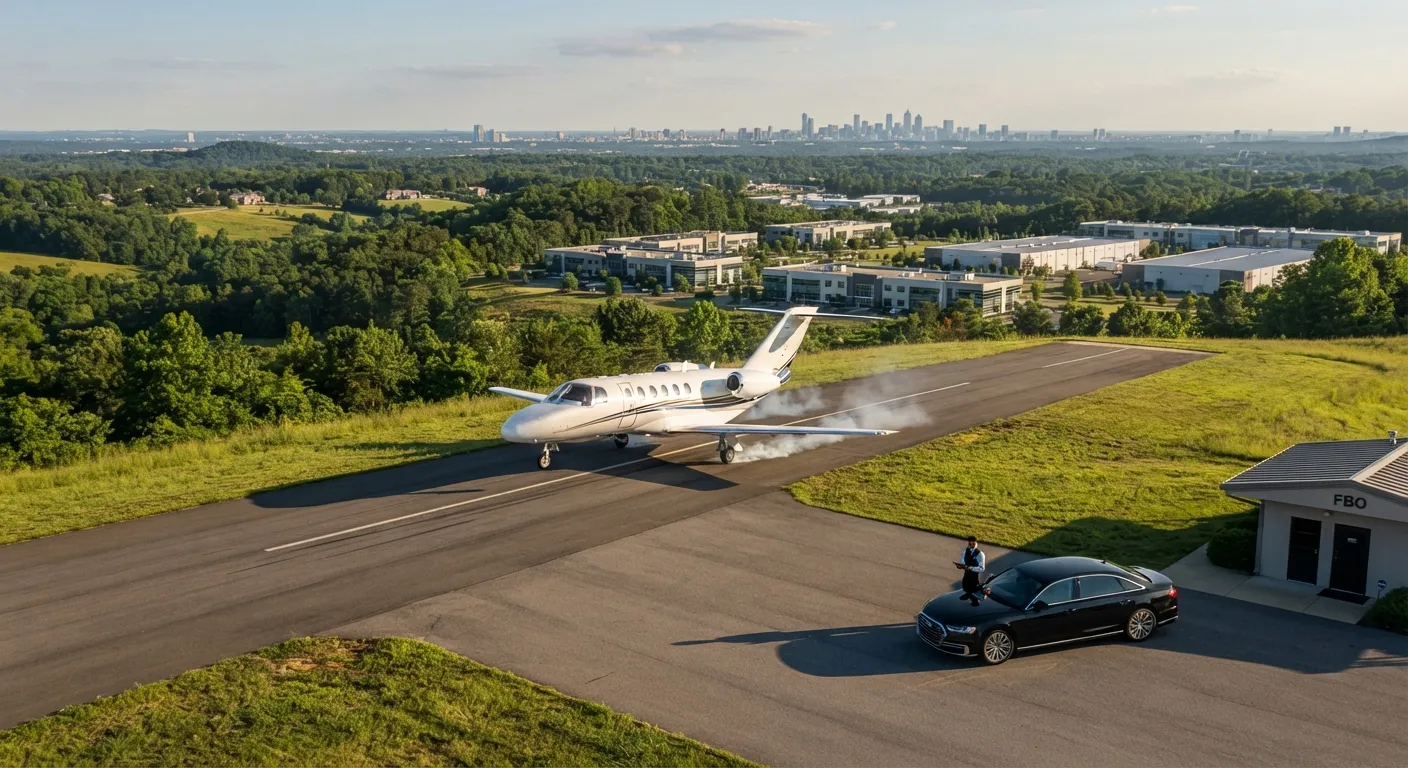
Big planes need big runways and big cities. The problem? Often your clients, your factories, your projects, or your investments are not in the center of Madrid, Miami, or Mexico City, but two hours away by road.
Private aviation unlocks more than 5,000 secondary and regional airports you could never reach on a scheduled commercial flight. You land ten minutes away from the industrial park, the estate, or the coast that required your presence. You save yourself the chauffeured car, downtown traffic, and the accumulated fatigue of three hours of post-flight asphalt.
When the Scale Finally Tips Toward Private
No one says you have to fly private to go backpacking for the weekend (though we can schedule that too, if it’s your preference). True common sense appears in three very specific scenarios:
The private jet is not a trophy of vanity; it is leverage. And when you understand that difference, going back to standing in line at gate B24 of a massive airport feels like a trip to the past you are no longer willing to pay for.
Do you have a complex itinerary on your hands or need to calculate the cost of your next corporate route? Write to us and we’ll put together a proposal for you!